
How to Choose the Right HDPE Pipe and Fittings for Your Project?
Categories:HDPE Pipe and Fitting Author: author
A small mistake at the piping stage can become a costly disaster later. The wrong pressure rating, a mismatched fitting, or a pipe unsuitable for temperature and soil conditions can cause leakage, downtime, and maintenance problems.
HDPE piping has become the go-to material for modern projects because it delivers corrosion resistance, flexibility, long-term reliability, and low lifecycle cost. Still, the market is crowded: HDPE water plumbing systems, agricultural irrigation pipes, pressure lines, drainage pipes, HDPE electrical conduits, and even steel-reinforced thermoplastic pipes. Each performs differently and serves a different purpose.
Understand HDPE pipe types through this article. Learn how to choose high-quality HDPE pipes and fittings.
Understanding HDPE Pipe and Fittings
Every project begins with a function. Water supply and wastewater pipelines live different lives. Agricultural irrigation systems operate under different pressure cycles compared to urban water mains. Electrical conduit pipes never carry fluids, but they must protect cables from soil stress, UV, and crushing.
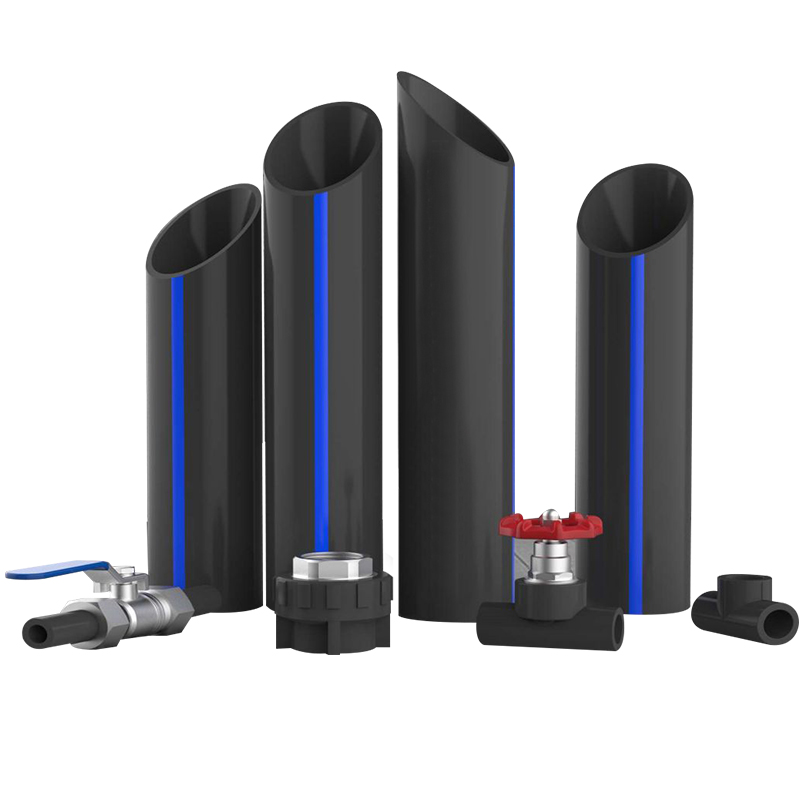
Let's break down the most common HDPE pipe types used in real projects:
HDPE Water Plumbing System
This category includes:
● HDPE Agricultural Irrigation Pipe: Irrigation pipes work in fields or large-scale farming. They handle fluctuating flow and pressure, exposure to sunlight, changing soil density, and mechanical drag from farming equipment. A PE100 irrigation line is commonly used because it tolerates pressure fluctuations and has strong chemical resistance against fertilizers and agricultural additives.
● HDPE Water Supply Pipe: Water supply pipes transport potable or industrial supply water. This is where pipe classification matters: SDR rating, wall thickness, and pressure resistance determine whether a line can carry water over long distances without bursting. Supply lines also need good fusion compatibility—especially if the system uses butt fusion, electrofusion, or socket fusion.
● HDPE Drainage Pipe: Drainage pipes don't deal with internal pressure but face different challenges: sediment accumulation, soil movement, long-term exposure to rainwater or wastewater, and frequently, underground burial without external protection. In many projects, contractors prefer flexible HDPE drainage pipes because they resist cracking and perform better than rigid PVC under soil movement.
Understand Pressure Ratings and SDR
The most overlooked mistake is ignoring SDR. The Standard Dimension Ratio (SDR) determines how thick the wall of the pipe is relative to its diameter. A lower SDR means thicker walls and higher pressure tolerance.
● SDR11–SDR17 → Suitable for pressurized lines such as municipal water supply or industrial transfer.
● SDR21–SDR26 → Suitable for irrigation or low-pressure systems where flow, not pressure, is critical.
● High SDR values → Typically used for drainage or gravity lines with no internal pressure.
Pipe Material Grade: PE80, PE100, and Reinforced Structures
HDPE is grouped into performance grades.
● PE80: Flexible, lighter, suitable for moderate-pressure installations or shorter networks.
● PE100: The industry's gold standard for municipal projects, mainline irrigation, and systems expected to run for decades. It provides higher tensile strength per wall thickness, meaning you can carry more pressure without increasing pipe weight.
● HDPE Steel Reinforced Thermoplastic Pipe for Water: This is a hybrid structure: a steel spiral skeleton encased in HDPE. It shines in projects with heavy soil load, mining operations, long-distance water transport, and deep burial under roadways.
Choosing between these is strategic. A private garden sprinkler system may be fine with PE80. A new urban water line should choose PE100 or reinforced HDPE as the safer investment.
HDPE Electrical Conduits
Water pipelines carry a liquid you can measure. Electrical conduits carry something you can't: current, signals, and data.
HDPE electrical conduit exists not to transport material, but to protect cables—often for decades without maintenance. Here is why engineers prefer HDPE:
● Dielectric safety: The material is inherently non-conductive. When buried in moist soil or near groundwater, it does not corrode or create short-circuit paths like metal conduits.
● Impact and soil stress tolerance: Unlike brittle PVC, HDPE bends. Soil settles, trucks pass above, temperature changes expand rock layers; a rigid pipe cracks under these stresses, an HDPE conduit absorbs them.
● Smooth inner surface: Fiber optics, telecom bundles, or power cables can be pulled long distances. A low-friction HDPE interior reduces installation forces, cable wear, and damage.
● Coil supply and installation speed: Many HDPE conduits are delivered in long coils. That translates into fewer joints, faster trenching, and smoother layout through complex terrain.
That's why HDPE electrical conduits appear in highways, airports, utility corridors, solar farms, and industrial parks. If your project involves sensitive wiring, treat conduit selection with the same seriousness as water pipelines.
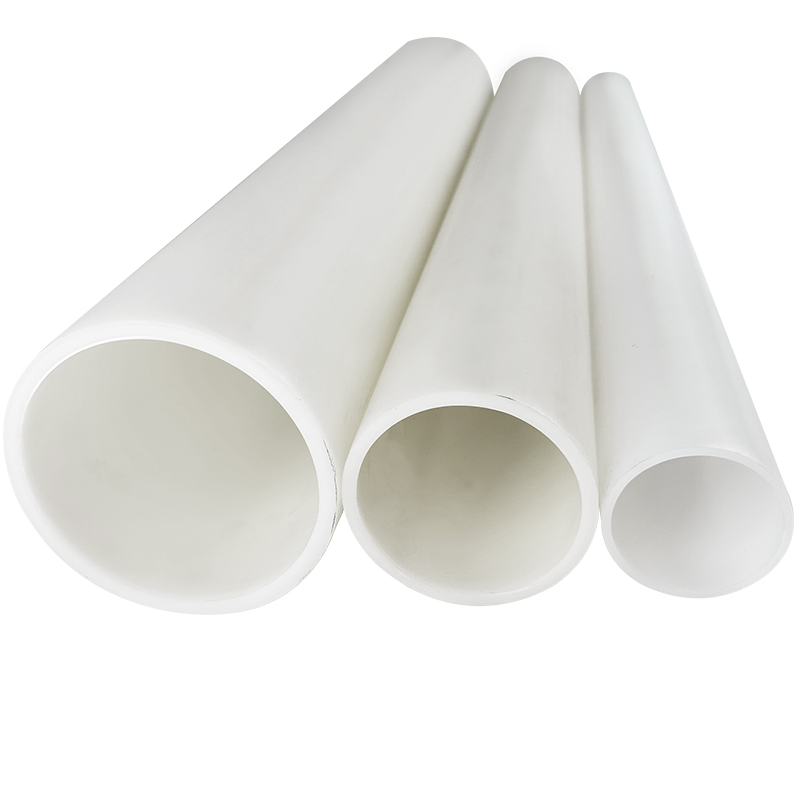
Choosing the Right Fittings
Treat fittings as functional engineering components, not accessories. Your fitting choice must match:
● the pipe's pressure rating
● grade (PE80/PE100)
● installation method
● environment
Fusion-Based HDPE Fittings
These fittings are designed to join pipes and become part of the pipeline structure permanently:
● HDPE Elbows (45°/90°) – navigate direction changes without stressing pipe walls.
● HDPE Tees (equal/reducing) – branch supply networks, irrigation lines, or drainage paths.
● HDPE Reducers – transition between large mainlines and smaller distribution lines.
● HDPE Couplers – connect two pipe sections in straight runs.
● HDPE End Caps – secure unused lines or temporary endpoints.
● HDPE Flanges & Stub Ends – connect to valves, tanks, pumps, meters, or metal systems.
These fittings exist in multiple joining forms:
● Butt fusion fittings: Melt both ends and fuse them into a seamless joint. Ideal for buried or permanent networks.
● Electrofusion fittings: Contain embedded heating wires. Precise, fast, reliable—used in urban networks, repairs, or confined spaces.
● Socket fusion fittings: Best for smaller indoor networks or compact plant systems.
● Mechanical compression fittings: Useful for low-pressure or temporary lines, though not recommended for long-term buried infrastructure.
A common mistake is mixing grades—for example, using PE80 fittings on PE100 pipe. Even if the system works initially, expansion cycles eventually crack the weaker component.
Accessories That Help the System Survive Real Conditions
The most successful installations include more than pipes and tees. Practical project accessories include:
● pipe saddles for branching on large diameters
● electrofusion control boxes for monitored welding
● backing rings and stub ends for secure flange connections
● spigot fittings for automated welding systems
● repair clamps for emergency breaches
● pipe clips or pipe brackets for exposed installations
Most failures occur during installation, not operation. Accessories prevent that.
Consider Real Conditions, Not Just the Datasheet
On the datasheet, every pipe looks perfect. In soil, temperature, and movement, reality decides.
● Hot climates (40°C and above): UV-resistant or buried HDPE is essential. Avoid exposed PVC.
● Cold regions (below zero): HDPE keeps flexibility. PVC becomes brittle.
● Coastal or chemical zones: Salt, fertilizer, and industrial discharge attack metal. HDPE remains unaffected.
Project Scale and Supply Reliability
A greenhouse irrigation system needs quick delivery and simple installation. A municipal pipeline needs something else: consistency.
When scaling up, prioritize:
● uniform diameter tolerance
● consistent materials from one batch
● certified pressure performance
● reliable fusion compatibility
● production traceability
In high-volume installations, one defective fitting can cost days of rework. A realiable manufacturer with automation, QC teams, and stable supply makes your life easier.
Cost vs. Lifetime Value
Contractors often focus on the purchase price. Clients often focus on service reliability. Only experienced engineers look at lifecycle cost. Cheap piping saves money today but may lose money in the future, such as leaks, trenching, replacement labor, and more.
Buried infrastructure is expensive to fix. A PE100 water main or reinforced HDPE line may cost more up front, but it often runs trouble-free for decades.
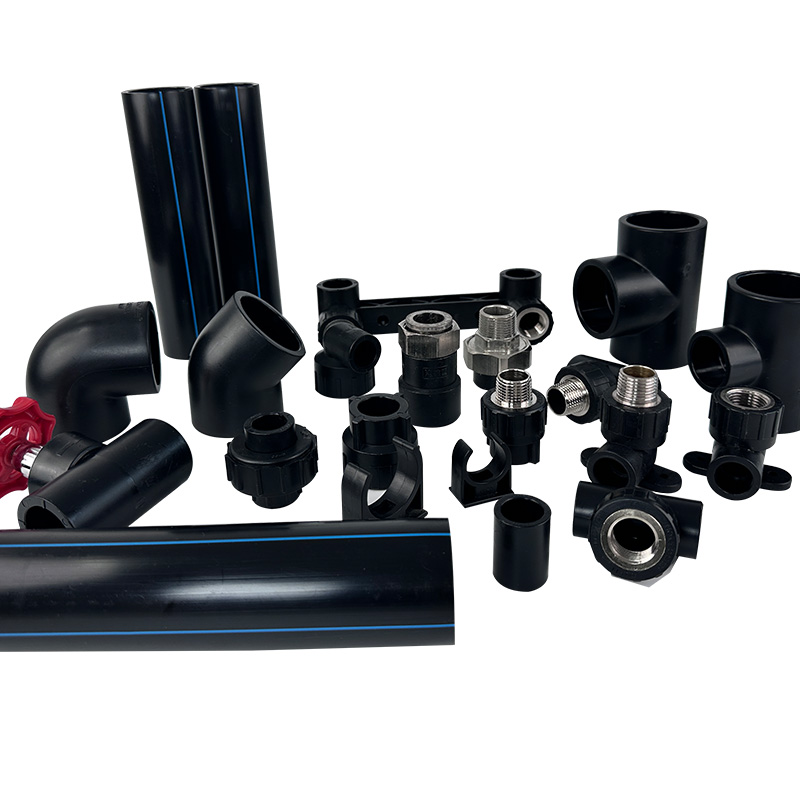
HDPE Water Supply Pipe and Fittings
Why a One-Stop HDPE Manufacturer Makes Everything Easier?
Buying pipes from one supplier, fittings from another, and accessories from a third can easily lead to inconsistent product quality. Partnering with a one-stop HDPE pipe and fittings manufacturer can avoid this situation.
With over 15 years of experience in the HDPE pipeline industry, ULP provides complete solutions across:
✅ HDPE Agricultural Irrigation Pipes
✅ HDPE Steel Reinforced Thermoplastic Pipes for Water
Our automated production workshops, over 10,000 m² of factory area, and professional quality teams support high-volume projects.
ULP also provides OEM/ODM customization—logo, color, diameter, packaging—making it suitable for distributors, engineering companies, or brand projects that need private-label production.
When your system requires matched pipes, fittings, and accessories, ULP delivers a complete solution—not just parts that may or may not fit together.
Conclusion: Choose HDPE Carefully, and Choose a Partner Like ULP
Choosing the right HDPE pipe and fittings is not a choice. It's an engineering decision based on application, pressure, SDR, grade, environment, installation method, and the quality of fittings. The more you understand, the fewer problems you'll face after the line disappears underground.
Whether you are installing water supply mains, building agricultural irrigation systems, laying drainage networks, or protecting electrical cables, choose materials that match your real-world conditions—and choose a partner that understands the entire process.
With reliable manufacturing, OEM support, and full system solutions, ULP helps ensure your pipeline performs, survives, and lasts.