

PPR Cold & Hot Pipe and Fitting: What You Need to Know?
Categories:PPR Water Plumbing System Author: author
When it comes to modern plumbing systems, especially for cold and hot water distribution, PPR pipes and fittings have become an industry standard. You may not always see them, but they are working behind walls, under floors, and above ceilings in residential buildings, commercial projects, and industrial facilities all over the world.
In this article, we will explore what PPR cold and hot pipes are, how they are made, where they are used, and why more contractors and project owners are choosing them.
What PPR Pipes Are and Why They Fit Cold and Hot Water Systems?
PPR (Polypropylene Random Copolymer) is a plastic material widely used for cold and hot water supply systems. Compared with some traditional pipe materials, PPR is known for:
● Heat resistance for domestic hot water systems (when matched with the right PN grade)
● Corrosion resistance (no rust issues like metal)
● Smooth inner wall that helps reduce pressure loss and scaling
● Hygienic performance for drinking water plumbing in many regions
● Fusion welding joints that can reduce leakage risk when installed correctly
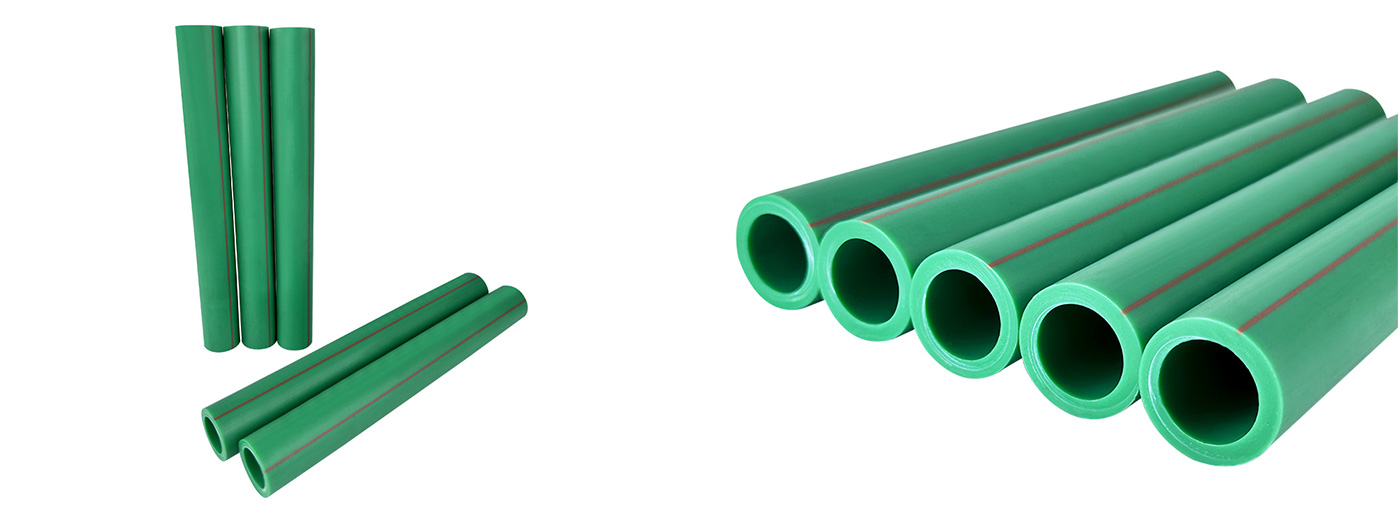
Cold vs. hot water: what changes in the pipe selection?
In real projects, PPR pipe is common in residential plumbing, commercial building water supply, and underground and above construction applications. Contractors also like it because the installation process is straightforward once the team is trained on socket fusion welding.
● For cold water lines, pressure is usually the key factor.
● For hot water lines, both pressure and sustained temperature matter, so the pipe grade selection becomes more important.
That's where PN ratings come in.
Understanding PN ratings: PN12.5 / PN16 / PN20 / PN25
PN rating is one of the first things you should confirm, because it ties directly to safety margin. In simple terms, the higher the PN grade, the stronger the pipe is against internal pressure, especially important when temperature rises.
A practical way to think about it:
● PN12.5 is usually considered for basic cold water distribution where working pressure is not high.
● PN16 works well for many standard cold water networks and mixed-use systems in smaller buildings.
● PN20 is a common choice for domestic hot water plumbing and projects that want a comfortable buffer.
● PN25 is typically used where pressure is higher, systems are more demanding, or the designer wants extra margin for hot water risers and special conditions.
Real selection should follow your local code, the system design pressure, and expected service temperature. If you are sourcing for multiple regions, it is smart to keep several PN grades available so you can match bids and specs without forcing one product into every project.
Sizes, Wall Thickness, and What They Mean in Real Projects
PPR pipes are not only about diameter. Size and wall thickness affect flow, installation space, and system stability.
A typical supply range in many catalogs is 20–160MM, with thickness roughly from 2.0–20.8MM depending on PN rating and size. Smaller diameters are used for bathroom and kitchen branches, medium diameters for floor distribution, and larger diameters for main supply lines or building headers.
When ordering for a project, check three points that often cause trouble later:
1. Dimensional consistency: outer diameter and wall thickness should be stable across batches
2. Matching tolerances: pipe ends and fitting sockets should align smoothly for fusion welding
3. Packaging and labeling: it sounds minor, but clear PN and size marking reduces site mistakes
PPR Fittings Explained: What Each One Does and Where It Is Used?
Fittings are not just accessories; they define how the whole plumbing network behaves. A reliable PPR pipe system depends on correct fitting selection, because most leaks and rework happen at joints and transitions.
Here is how common PPR pipe fittings are used in practice:
1. Direction Changes and Routing: An elbow is used when you need a clean direction change at corners, shafts, or ceiling routes. In tight spaces, a well-made elbow helps installers keep alignment without stressing the pipe.
2. Branching and Distribution: A tee is the everyday fitting for splitting a main line into a branch, such as feeding a bathroom group from a corridor line. A cross is less common but useful in certain grid-like layouts where four directions are needed, often in utility rooms or structured distribution points.
3. Straight Connections and Repairs: A coupling connects two pipe sections in a straight line. It is frequently used when pipes are cut for transport, when installers need to extend a run, or when a damaged section is removed and replaced. For maintenance-friendly areas, a union is used so a section can be dismantled later without cutting the pipe.
4. Diameter Transitions and End Closures: A reducer allows you to change from a larger trunk line to a smaller branch line. A cap closes the end of a pipeline, often for testing, future expansion points, or temporary shutdowns during phased construction.
5. Fixing and Support on Site: Clamps are not part of the flow path, but they are critical for workmanship. They hold the pipe in position, keep slopes consistent, and reduce vibration noise. A clamp with steel nail is often used for fast anchoring on walls or ceilings, especially in high-volume installation work where speed matters.
6. Valves and Threaded Transitions: For water control, the most common choices are ball valve and stop valve. Ball valves are popular for quick shut-off and low resistance. Threaded transition valves like a female thread union ball valve or male thread union ball valve are used when you must connect PPR lines to metal threaded equipment, meters, pumps, or existing pipelines.
7. Vibration and Alignment Issues: A flexible joint can help when there is vibration from equipment, slight misalignment in a shaft, or thermal movement. It is not needed everywhere, but it is a practical option in mechanical rooms and near pumps or tanks.
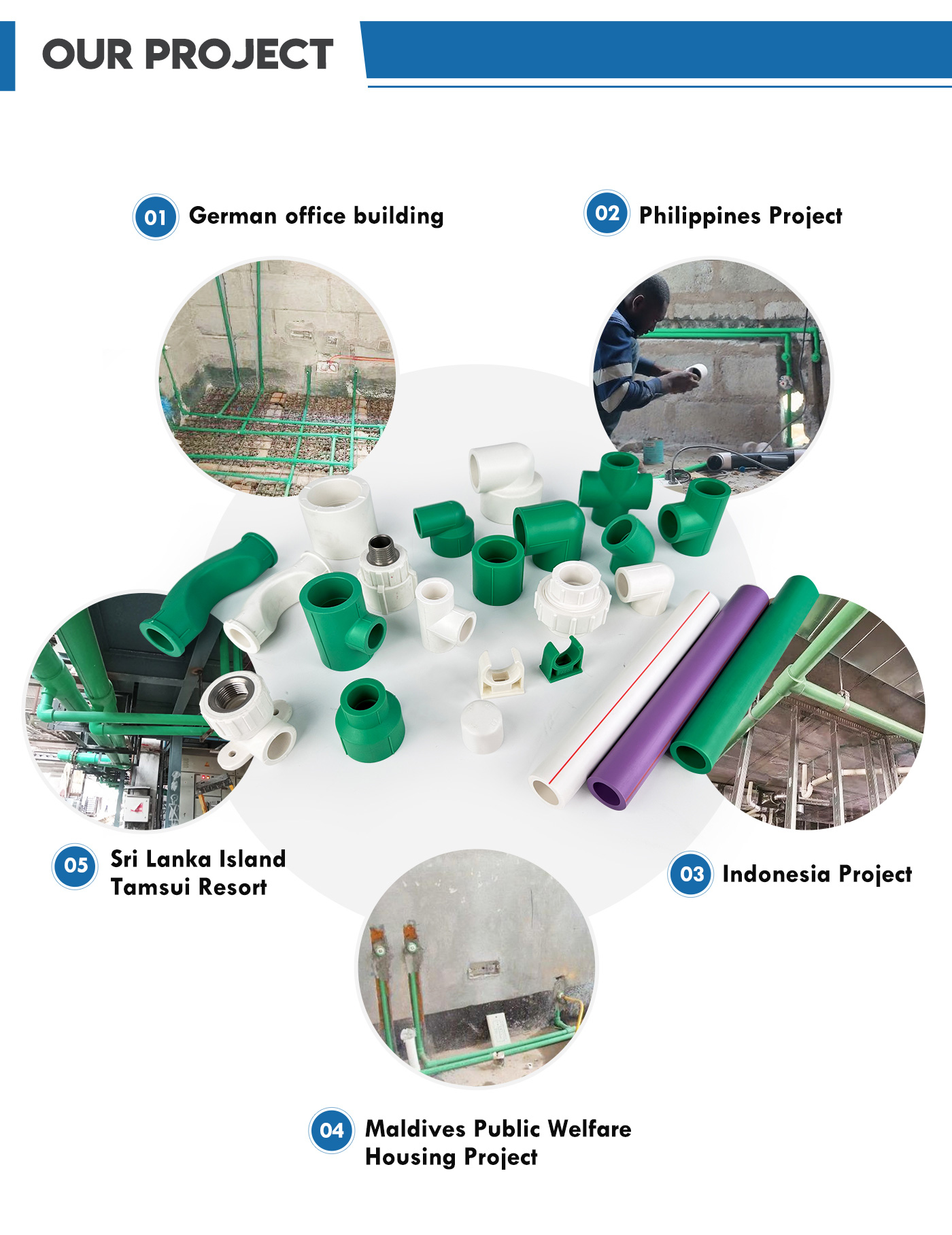
PPR Cold / Hot Water Pipe and Fitting
Color Options, OEM/ODM, and Packaging Choices
Color is not only branding. On busy jobsites, color can support identification and reduce mistakes. Many buyers choose green, white, purple, or customized colors for clear separation of systems or for market preference.
OEM/ODM customization is also practical when you are building a distributor brand, managing regional packaging requirements, or bidding on projects that request private label. Common customization items include logo printing, color, size marking format, and packaging options that match retail or bulk delivery needs.
Why Many Buyers Prefer a One-Stop PPR Pipe and Fittings Supplier?
Mixing pipes from one supplier and fittings from another often creates installation issues: sockets can be tight or loose, welding behavior differs, and liability becomes unclear. A one-stop plastic piping system solution makes it easier to keep compatibility, reduce procurement time, and simplify after-sales communication.
This is one reason buyers look for suppliers who can cover the common size range, multiple PN grades, valves, and the full fitting catalog in one place, while still offering OEM/ODM customization.
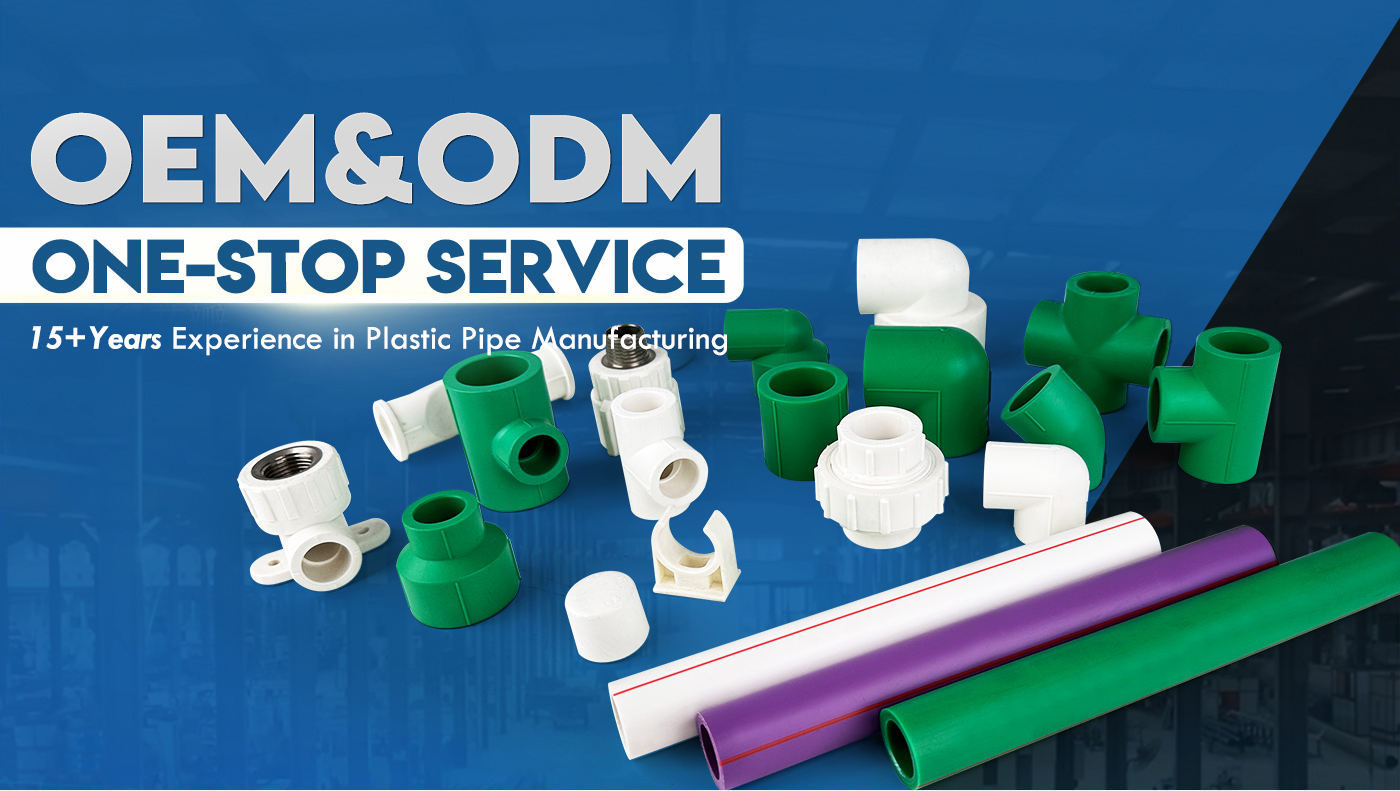
One-stop PPR Water Plumbing System Solution
Conclusion: Build a Reliable PPR System with ULP
A good PPR cold and hot water system is not only about the pipe. PN rating selection, correct size and thickness, proper fitting functions, and decent installation practices all matter. When these points are handled well, PPR piping can deliver stable performance for residential plumbing, commercial building water supply, and underground and above construction.
ULP provides PPR pipes and PPR pipe fittings with PN12.5, PN16, PN20, and PN25 options, covering 20–160MM sizes with OEM/ODM support for logo, colors, and packaging. For buyers who want consistent quality and a one-stop plastic piping system solution, it is a practical partner. Feel free to contact us for more detailed information.