
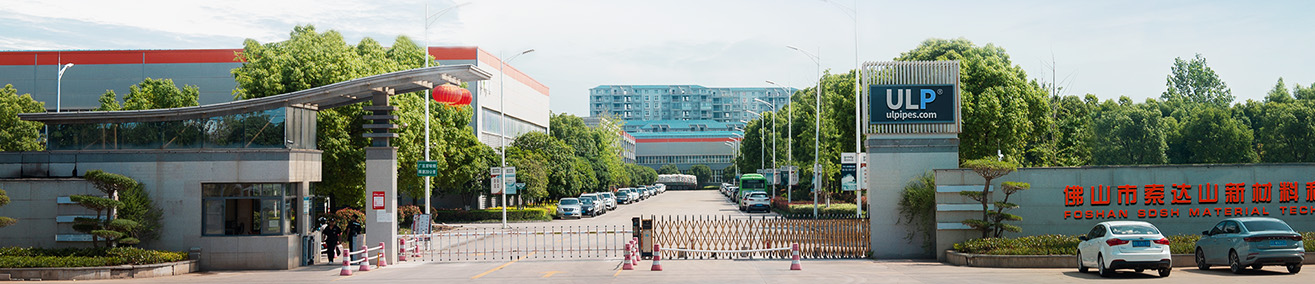
Common PPR Pipe Fittings: Main Types and Where They're Used?
Categories:PPR Water Plumbing System Author: author
PPR piping systems have become a standard choice in modern plumbing, especially for hot and cold water supply. When people talk about PPR pipes, fittings are often mentioned only briefly, but in real projects, fittings play an equally important role. A well-designed PPR pipe system depends heavily on the right fittings, installed in the right places, and made with reliable quality.
PPR Pipe Fittings Matter More Than You Think
In residential buildings, commercial plumbing, and industrial water systems, fittings are where pressure, temperature changes, and human installation mistakes usually show up first. Pipes are straight and predictable. Fittings deal with direction changes, branch connections, transitions, and terminations.
Poor-quality PPR fittings can cause leakage, deformation, or weak fusion joints, even if the pipes themselves are fine. That's why professional installers often say that a PPR system is only as good as its fittings.
PPR pipe fittings are designed to work with heat fusion welding, creating a homogeneous joint between pipe and fitting. When done correctly, the joint becomes stronger than the pipe itself. This is one of the main reasons PPR plumbing systems are trusted for long-term water supply applications.
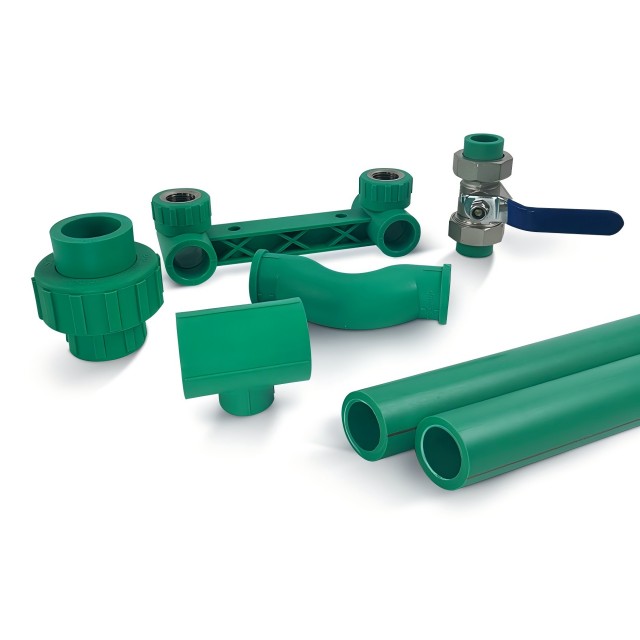
Elbow Fittings: Changing Direction Without Losing Strength
Elbow fittings are probably the most frequently used PPR fittings in any project. They are mainly used to change the direction of the pipeline, usually at 90 degrees or 45 degrees.
In real installations, PPR elbows are commonly found behind walls, under floors, and inside ceilings. That means once they are installed, repairs are difficult and expensive. For this reason, elbow fittings must have uniform wall thickness and stable material quality.
There are two main types installers use:
● PPR 90-degree elbow fittings, often used at corners and wall transitions
● PPR 45-degree elbows, used when smoother flow and reduced pressure loss are required
In hot water systems, especially in residential apartments and hotels, elbows are under constant thermal stress. High-quality PPR fittings from reliable manufacturers like ULP are designed to maintain shape and fusion strength even after repeated heating and cooling cycles.
Tee Fittings: Creating Branch Connections
Tee fittings are essential when a main water line needs to branch into two directions. You'll see PPR tee fittings everywhere in apartment buildings, villas, hospitals, and office plumbing systems.
A typical example is a vertical riser pipe that branches off to serve kitchens, bathrooms, or individual rooms. In these situations, equal tee fittings are used when all branches have the same diameter, while reducing tees are chosen when a smaller branch line is needed.
Reducing tees are especially common in commercial plumbing projects where water demand varies between different areas. The internal structure of the tee must be smooth and well-molded to avoid turbulence, noise, or pressure imbalance.
ULP manufactures a full range of PPR tee fittings with stable dimensions and consistent fusion performance, making them suitable for both residential and large-scale commercial applications.
Couplings and Unions: Connecting Pipes the Right Way
Couplings are simple but extremely important fittings. They are used to connect two straight sections of PPR pipe with the same diameter. In practice, couplings are often needed when repairing or extending an existing pipeline.
Unions, on the other hand, are designed for locations where future disassembly may be required. For example, near water meters, pumps, or valves, PPR union fittings allow maintenance without cutting the pipe.
In industrial water systems and equipment connections, unions are a smart choice because they save time and reduce damage during servicing. A well-made PPR union should seal tightly while still allowing easy reconnection.
Male and Female Threaded Fittings: Transition to Metal Components
Not every part of a plumbing system is plastic. Water heaters, pumps, faucets, and valves usually come with metal threaded connections. This is where PPR threaded fittings become essential.
These fittings combine a PPR body with a brass insert, available in male or female thread designs. The brass insert must be firmly embedded and resistant to loosening under pressure and temperature changes.
Threaded PPR fittings are widely used in:
● Water heater connections
● Sanitary ware installation
● Commercial plumbing systems
● Industrial fluid distribution
End Caps and Plugs: Small Parts with Important Functions
End caps and plugs are used to close off the end of a pipeline. They are often overlooked but are critical during pressure testing and future system expansion.
In construction projects, installers may temporarily cap certain lines and open them later. A poor-quality end cap can fail during pressure testing, causing delays and extra labor costs.
Ball Valves and Integrated PPR Valves
Modern PPR systems often integrate PPR ball valves, which allow water flow control without switching to metal valves. These valves are commonly installed in residential units, hotels, and public buildings.
Integrated PPR valves reduce the number of transition points, lowering the risk of leakage. They are lightweight, corrosion-resistant, and easy to install with heat fusion.
Where PPR Pipe Fittings Are Commonly Used?
PPR pipe fittings are widely used across different industries and building types. Some of the most common application scenarios include:
● Residential plumbing systems for hot and cold water supply
● Commercial buildings such as offices, malls, and hotels
● Hospitals and schools where hygiene and reliability are critical
● Industrial water distribution and fluid transport
● Agricultural irrigation and water management systems
Each application has different requirements for pressure, temperature, and installation conditions. That's why choosing the right PPR fittings supplier is as important as choosing the right pipe.
Why More Buyers Choose ULP for PPR Pipe Fittings?
As a professional manufacturer, ULP offers a complete range of PPR pipe fittings designed to meet international standards. What sets ULP apart is not just product variety, but the ability to provide a one-stop plastic piping solution.
ULP supplies:
● A full range of PPR pipe fittings
● OEM and ODM services
● Custom logo, color, and size options
● Flexible packaging choices for different markets
● Stable quality control and automated production
For distributors, contractors, and project buyers, working with ULP means fewer suppliers, better consistency, and easier project management.
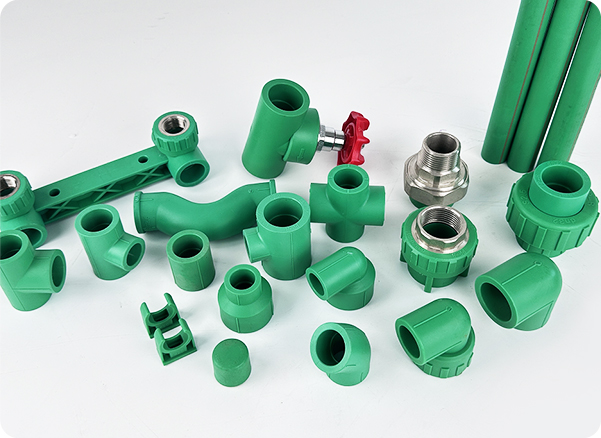
PPR Pipe Fittings Manufacturer and Supplier
Conclusion: Choosing the Right PPR Fittings Starts with the Right Partner
Understanding common PPR pipe fittings and where they're used helps avoid costly mistakes in real-world projects. From elbows and tees to threaded fittings and valves, every component plays a role in system performance and durability.
For buyers looking for reliable quality, customization options, and long-term cooperation, ULP stands out as a trusted supplier of PPR pipe fittings and complete plastic piping solutions. With OEM/ODM services and a wide product range, ULP supports projects of all sizes, from residential plumbing to large commercial and industrial systems.