

Schedule 40 vs Schedule 80 PVC Conduit: What Changes Besides Wall Thickness
Categories:PVC Pipe and Fitting Author: author
Wall thickness is usually the first thing people mention when Schedule 40 and Schedule 80 PVC conduit come up, but in actual conduit runs that specification affects much more than impact resistance. Internal space shifts, pulling behavior changes, support loads feel different, and fitting choices start carrying consequences that do not show up on a product chart alone. That is why contractors, engineers, and buyers often run into confusion when two conduits with the same trade size behave differently once installed.
A useful way to understand Schedule 40 and Schedule 80 is to stop looking at them as two pipe products and start looking at how each affects the full conduit run.
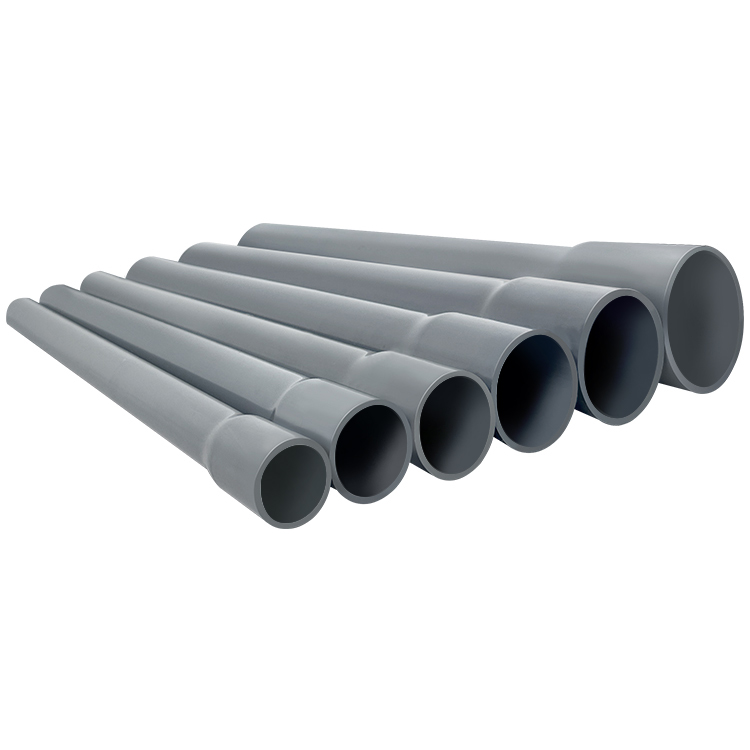
Schedule 40 vs Schedule 80 PVC Conduit: Basic Differences
| Aspect | Schedule 40 PVC Conduit | Schedule 80 PVC Conduit |
|---|---|---|
| Wall Construction | Standard wall thickness | Thicker wall construction |
| Mechanical Protection | Suitable for general protection needs | Higher resistance in demanding environments |
| Weight and Handling | Lighter and easier to handle in field installation | Heavier, often requires more effort during installation |
| Cutting and Installation | Faster cutting and simpler field work | More robust but may take more effort to work with |
| Internal Space | Larger usable interior at the same trade size | Reduced internal space due to thicker walls |
| Typical Use Environments | General building runs, many underground installations | Exposed areas, equipment zones, traffic-prone locations |
| Pulling Behavior | Often easier conductor pulling in comparable sizes | Pulling conditions may tighten as wall thickness increases |
| System Role | Standard raceway protection | Added mechanical protection within the raceway system |
How Wall Thickness Changes Internal Space and Cable Fill
Internal Diameter and Conductor Space
Trade size often causes people to assume usable space remains the same. In practice, thicker walls reduce interior diameter. That reduction can affect conductor fill, spacing, and pulling conditions, particularly where multiple conductors or longer pull distances are involved.
A design that appears acceptable in one schedule may feel much tighter in another when conductor count stays unchanged. In dense runs, that difference can affect heat considerations, fill calculations, and even box sizing decisions downstream.
That is one reason schedule choice often interacts with system layout rather than sitting as a standalone material decision.
Pulling Resistance Considerations
Smaller internal clearance influences friction during pulls. Longer runs, bends, and conductor bundles can magnify that effect.
Field crews often feel these differences before they show up in paperwork. Pulling tension, lubricant use, and run segmentation may all need more attention once schedule changes.
These are operational consequences, not theoretical ones.
Pulling, Handling, and Installation Differences in Real Runs
Heavier conduit changes field behavior.
Installers notice it in transport bundles, cutting effort, support loading, and sometimes in bend handling. On straightforward exposed runs this may have limited impact. On larger projects with repeated installation cycles, those differences accumulate.
Schedule 40 often supports faster handling where protection requirements allow it. Schedule 80 can add durability in exchange for more weight and slightly different installation feel.
Underground work can sharpen these differences further. Burial conditions, transition points, risers, and equipment entries often create places where the conduit schedule affects installation logic more than broad product descriptions suggest.
Some projects use both schedules in different segments precisely because one continuous answer is not always the most efficient one.
Fittings, Boxes, and Compatibility in Schedule 40 and 80 Systems
Schedule discussions often stop at conduit walls, while fittings deserve equal attention.
Couplings, elbows, boxes, adapters, and support hardware all sit inside the same system logic. Compatibility may remain straightforward in many cases, but assumptions should not replace review.
Conduit bodies, box entries, fill calculations, and support spacing may need reconsideration depending on run conditions.
This is where schedule choice often shifts from “pipe selection” into “system coordination.”
Design teams sometimes focus heavily on conduit material while giving less attention to how associated fittings behave once the run becomes more demanding. That can create friction later during installation.
Looking at fittings as part of schedule impact often produces cleaner project outcomes.
When Schedule Differences Matter Most in Electrical Conduit Projects
Underground Protection Demands
Buried systems often bring physical loads, settlement concerns, and transition stresses that make schedule selection more consequential.
Here the discussion usually extends beyond durability alone into maintenance exposure, routing confidence, and long-term protection strategy.
Industrial and General-Purpose Applications
Industrial spaces can introduce mechanical exposure, equipment traffic, and harsher environments where thicker conduit walls can serve practical protection goals.
General-purpose runs may place more emphasis on installation efficiency and project economics.
What matters is understanding where schedule changes affect the performance of the run, rather than assuming thicker wall means a universal upgrade.
Conclusion
Schedule 40 and Schedule 80 PVC conduit differ in ways that extend far beyond wall thickness. Internal space, pulling behavior, fitting coordination, and installation conditions all shift once schedule changes. Those effects become clearer when the conduit is treated as part of a full raceway system rather than a single material choice. Find more in ULPIPES.